
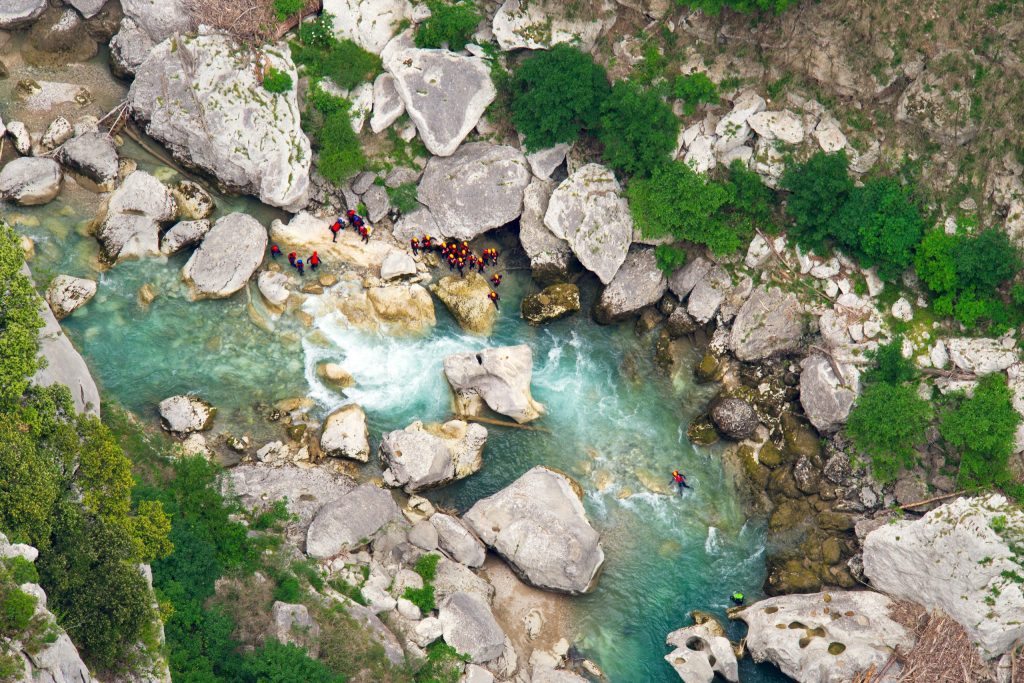
The best day around this limestone gorge pairs a 2h30 descent with one or two close-by stops, not a packed road trip across the whole French Riviera. Plan around water, shade, parking, road flow, and the energy level of your group after the descent.
At Adrenaline 06, we guide from our Gourdon base at 400 bis route des Gorges, 06140 Gourdon, with free parking, included return shuttles, and more than 25 years as specialists in the Alpes-Maritimes. This guide helps you choose what to do before or after the water, whether you’re with children, non-participating friends, or a private group.
Build the Day Around the Descent
A canyoning outing here is not a full-day expedition, but it does need a clear rhythm. The standard descent takes about 2h30 in the canyon, with the full outing usually closer to 3h30 once you include the short approach, getting equipped, briefing, and return shuttle.
That leaves the morning or early afternoon for one nearby visit, a calm lunch, or a short walk. If you’re coming from Nice, Grasse, or the coast in summer, leave slack in the day. The RD6 can feel much longer when everyone is trying to reach the same cool water.
Practical Timing Table
Our canyoning gorges du loup outing is priced at 60 euros per person, or 55 euros for groups of 8. The price includes the technical equipment and the shuttle back to base, which keeps the logistics clean.
That’s why we recommend building the day around one descent and one close visit. Once the group is dry, changed, and hungry, simple decisions work best.
What to Visit Before the Water
Gourdon is the easiest first stop if you want a beautiful start without draining energy before the descent. The village sits high above the valley, with panoramic views that run from the Mercantour to the Mediterranean coast on a clear day.
The village is also known for its castle and gardens attributed to André Le Nôtre. Keep it light, because a short stroll, a drink, and the view are enough before neoprene, helmets, and cold water.
Good Pre-Canyoning Stops
- Gourdon works well for viewpoints, photos, and a short village walk before meeting at the base.
- Bar-sur-Loup is useful when you want food, shade, and an easier road rhythm.
- Tourrettes-sur-Loup suits people who prefer crafts, violets, small streets, and a slower start.
- Grasse is better for perfume museums and culture if part of your group is not joining the descent.
Options for Non-Participants
Tourism and culture matter here. Accompanying friends who do not do the activity still have worthwhile choices nearby, from the perfume town of Grasse to the village of violets at Tourrettes-sur-Loup and calm walks beside the river.
In other words, there are still plenty of tourism and cultural options for people who stay dry while the canyoning group is in the water.
Children and Hot Weather
For a group with children aged 8 and older, keep the morning calm. The canyon has natural rock slides, swims in translucent basins, and jumps from 2 to 10 metres, so it’s better to arrive fresh than already tired.
The canyoning appeal is still the centre of the day. In practical terms, the Gorges du Loup are a good place to cool down in hot weather when the group wants water, shade, and a guided way to enjoy the river safely.
Where to Go Post-Canyoning
After the descent, choose food, shade, water viewpoints, or a village walk within a short drive. The best post-canyoning stops are Pont du Loup, Confiserie Florian, Bar-sur-Loup, Tourrettes-sur-Loup, and Gourdon, because they do not force tired groups back into long traffic.
Pont du Loup is the classic low-effort stop after a descent. You can stay near the valley, find something sweet, and avoid turning the afternoon into a second expedition.
Match the Stop to the Group
If you want more adventure, a via ferrata or climbing outing usually fits another day better than the same afternoon. The descent already asks for swimming, downclimbing, balance, and attention to the guide’s instructions.
At the water’s edge, the route is playful but still technical. State-certified guides, or equivalent, make sure each jump or natural rock slide can be bypassed by the riverbank, walking, or a controlled abseil when conditions and the route allow.
How We Read Difficulty and Safety
The canyon is accessible to beginners, but accessible does not mean careless. We use a guide’s reading of water flow, weather, group level, and obstacle choices, supported by the French canyon grading system.
The canyoning grading resource (ukcanyoning.org) uses a three-part alphanumeric system. It is based on a theoretical group of 5 people discovering the canyon in normal seasonal water flow, with vertical difficulty, aquatic difficulty, and commitment graded separately.
The Three-Part Grading Logic
- Vertical difficulty is shown as “v” followed by 1 to 7, and it covers rope work, downclimbing, exposure, and technical movement.
- Aquatic difficulty is shown as “a” followed by 1 to 7, and it covers water challenges, swims, current, jumps, and natural slides.
- Commitment uses Roman numerals, from I upward, to show scale, escape options, and overall seriousness.
- Jumps and slides are evaluated, but the system assumes jumps are optional and can be bypassed by abseiling or walking.
What That Means on the Day
For UK readers, this technical approach sits well beside British Mountaineering Council guidance on canyoning equipment and mountain activity judgement. It gives you a better question than “is it scary?” Ask instead what the water level, group size, and bypass options look like on the day.
Adrenaline 06 brings that judgement from lived mountain experience. Thomas Auvaro, high mountain guide, holds the internationally recognised UIAGM credential and is an former member of the GMHM, the Groupe Militaire de Haute Montagne based in Chamonix.
Who Guides You
Philippe Auvaro is a canyon guide, an former professional firefighter, and the founder and former trainer of the French national canyon rescue school. The team includes state-qualified guides or equivalent, and former trainers at the French national canyon rescue school for the fire service.
Competitor research also shows why named credentials matter: Jean-François and Damien Paltrinieri are cited with state-recognised canyoning qualifications. For visitors, the useful lesson is to look for the same level of explicit guide qualification before choosing any canyoning provider.
That background changes how we brief a family, a nervous swimmer, or a private group of friends. The aim isn’t to push everyone toward the biggest jump. The aim is to progress with peace of mind and expertise.
What UK Travellers Should Check Before Booking
UK visitors should treat canyoning like an adventure sport, not a beach add-on. The Foreign, Commonwealth and Development Office says France is subject to a sustained threat of terrorism and that attacks could be indiscriminate, including in public spaces, cultural venues, and transport hubs.
The same France travel advice (gov.uk) also tells travellers to get insurance that covers the itinerary, planned activities, and emergency expenses. Standard policies often exclude canyoning, abseiling, mountaineering, or scuba diving beyond certain depths, so do not assume a basic annual policy is enough.
Pre-Booking Checklist for UK Visitors
- Check FCDO advice before travel, not only before buying flights.
- Confirm your insurance names canyoning or covers hazardous activities through an added rider.
- Compare specialist options such as Cover My Adventure, World Nomads, and Allianz Assistance if your standard insurer excludes the activity.
- Carry GHIC or valid health cover details, even though France has safe tap water and no specific mandatory vaccinations for ordinary travel.
- Bring swimwear, a towel, dry clothes, trainers, and a sports cord for glasses if needed.
Insurance and Conditions
The policy point matters because a claim can be denied if the activity sits outside the wording. That’s not a nice surprise to discover after an incident, especially when you are abroad.
We also stay attentive to water flow and weather conditions. In warm periods, the gorge is refreshing because the water comes from clear, mineral sources near Saut du Loup, but water level and weather still decide how a descent should be run.
For a fuller sense of the descent itself, our English guide to gorges du loup canyoning explains the route, equipment, and beginner-friendly character. You can also read our French guide to an unforgettable Gorges du Loup canyoning experience if you want a more local feel for the outing. The route remains accessible, but the surroundings deserve care.
FAQ
The answers below cover the travel questions we hear most from visitors planning canyoning, villages, via ferrata, and wider Alpes-Maritimes activities.
How Long Do You Need in Verdon Gorge?
Verdon Gorge usually deserves a full day if you are driving viewpoints, hiking, or doing water activities. For this article, we do not recommend adding it before or after a Loup valley descent, because it is a different area and would turn a focused canyoning day into a long transfer.
Where Is the Best Canyoning in the World?
There is not one single best canyoning destination. France, Spain, Italy, Switzerland, Slovenia, Madeira, and parts of the USA all offer exceptional routes, but the best choice depends on season, water level, guide quality, and your experience. For beginners near Nice, this canyon is one of the most accessible choices.
Is Canyoning Suitable for Beginners?
Yes, canyoning can suit beginners when the route, water flow, and guide choice match the group. In our local descent, jumps and natural slides can usually be bypassed, and children from 8 years old can join when they have a small sporty level and conditions are suitable.
What Is Canyoning in France?
Canyoning in France is a guided descent of a natural canyon using walking, swimming, jumps, natural rock slides, downclimbing, and abseils where needed. Routes are graded with vertical, aquatic, and commitment ratings, so a family outing and an advanced mountain descent do not sit in the same category.
Do I Need Special Insurance for Canyoning?
Yes, many UK travellers need specialist adventure sports cover or an added activity rider. Standard travel policies often exclude canyoning, abseiling, mountaineering, or similar hazardous activities, so you should check the exact wording before booking and carry proof of cover during the trip.
What Should Non-Participants Do Nearby?
Non-participants can visit Grasse, Tourrettes-sur-Loup, Gourdon, Confiserie Florian, or take a calm river walk while the group is in the water. This is why the area works well for families and mixed groups: the descent is active, but the surrounding villages offer culture, shade, and food.
For a clear, well-paced canyoning day near Nice, contact Adrenaline 06 in the Alpes-Maritimes via WhatsApp, phone, or email, or call +33 6 62 03 96 20. We’ll help you choose the right descent, timing, and nearby stop for your group.